


How Drainage Works in UK Properties
A toilet backs up. A gully overflows in heavy rain. A chamber sits full when it should be running clear. A smell appears inside the property and seems to come from nowhere. The instinct is to blame the place where the problem appears. In drainage, that is often the first mistake.
Drainage problems are often read backwards. The visible symptom is a clue, not the diagnosis. To understand what is happening, read the system in motion: where water enters, how it travels, where it slows, and where it should leave.
In UK properties, that movement usually involves two main flows: foul water from inside the building and surface water from rain. These flows may run separately, share a combined system, pass through private drains, join lateral drains, or enter public sewers depending on the age, layout, and drainage history of the property.
How to Think About Drainage in 30 Seconds
- Start with the water: is it foul water, rainwater, combined flow, or off-mains drainage?
- Find the direction of travel: where does it enter, where should it leave, and where does it slow or stop?
- Use access points: chambers, gullies, rodding points, and covers show what the system is actually doing.
- Separate symptom from cause: the first place water appears is not always where the fault begins.
- Check responsibility last: ownership depends on the pipe, the users served, and the onward connection.
Key principles used in this guide
- start with what the water is doing, not only where it appears
- separate foul water from surface water wherever possible
- trace the run through chambers, junctions, shared sections, laterals, and sewers
- treat responsibility as a connection-and-flow question, not a cover-location question
- use related guides when the issue becomes a blockage, repeated symptom, or ownership question
A Drainage System Is a Route, Not a Single Pipe
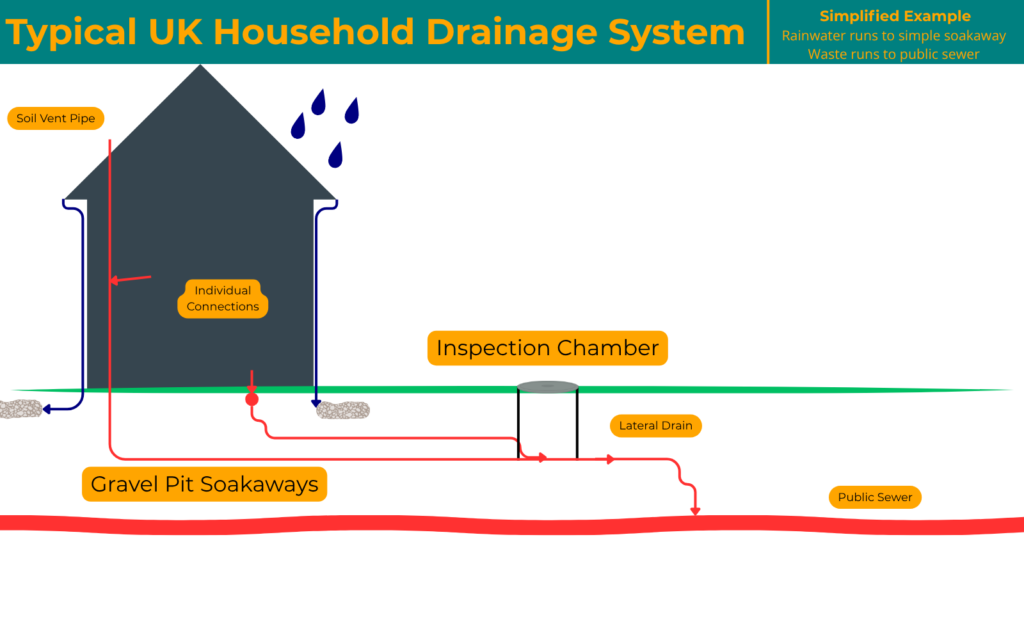
A drainage system is the route that takes wastewater and rainwater away from a property. It includes the pipework, fittings, gullies, chambers, and discharge points that move water from fixtures, roofs, yards, and underground drains toward a sewer, soakaway, pump station, septic tank, or treatment plant.
No two drainage layouts should be assumed to behave the same way. A modern estate, an older terrace, a rural property, a converted flat, and an extended semi-detached house may all move water away differently. Some systems are simple and direct. Others are a patchwork of original pipework, extensions, replacement gullies, hidden chambers, and altered surface water connections.
Good drainage diagnosis starts with two questions: where is the water trying to go, and what is stopping it? A blocked shower, overflowing gully, full chamber, or sewage smell is not automatically a local fault. It may be the first visible effect of a restriction, poor fall, misconnection, shared drainage issue, surcharging sewer, or off-mains failure further downstream.
Foul Water
Foul water is used water from inside the property: toilets, basins, baths, showers, kitchen sinks, washing machines, dishwashers, and utility areas.
Usually discharges to: foul sewer, combined sewer, pump station, septic tank, treatment plant, or another foul drainage system.
Surface Water
Surface water is rainwater from roofs, gutters, downpipes, patios, drives, yards, paths, and other hard surfaces.
Usually drains to: soakaway, watercourse, surface water sewer, attenuation system, SuDS feature, or older combined system.
This distinction matters on site. A gully may collect roof water, yard water, kitchen waste, or combined flow. Its position outside the property does not prove what it carries, and guessing wrong can send the investigation down the wrong pipe.
How Water Actually Moves Through the System
Once you know what kind of water you are dealing with, the next question is practical: where does it enter, what does it pass through, and where should it come out?
Inside the building, foul water leaves fixtures through waste pipes or soil pipes. Traps hold water seals to stop foul air returning into rooms. Soil stacks, branch pipes, and above-ground wastes then connect internal plumbing to the underground drain.
Outside the building, rainwater is collected by gutters, downpipes, gullies, channels, and surface inlets. From there, it enters a surface water system, a combined system, or a private rainwater system such as a soakaway.
Below ground, the flow may pass through buried pipework, bends, junctions, inspection chambers, shared sections, lateral drains, and public sewers before reaching treatment or discharge. Bends, junctions, material changes, poor fall, and shared connections are where straightforward runs often become the trouble spots.
How the wider network fits in
Once water leaves the property drain, the question becomes who else it serves and who is responsible for it. A private drain usually serves one property and is commonly within that property’s boundary. A shared drain carries flow from more than one property. A lateral drain is usually the section outside the property boundary that carries flow toward the public sewer. Public sewers serve multiple properties or form part of the adopted sewer network.
These definitions matter because they affect responsibility. A blockage in a private drain is different from a blockage in a public sewer, even if the symptom appears in the same garden. This is covered in more detail in Drainage Responsibilities Explained.
Common UK layouts
In a separate system, foul water and surface water should use different paths. Foul water goes to a foul sewer or treatment system. Rainwater goes to a surface water sewer, soakaway, watercourse, attenuation system, or SuDS feature. The key risk is misconnection: foul water entering surface drainage, or rainwater adding load to foul drainage.
In a combined system, foul water and rainwater share the same drainage system. This is common in older streets and established urban areas. A combined system is not automatically faulty, but rainfall and wastewater can affect the same pipework, which matters when diagnosing flooding, smells, or surcharging. The diagnostic clue is timing: problems that worsen in rain may point to capacity or surcharging, not just a blockage.
Some properties are off-mains and are not connected to a public foul sewer. They may use a septic tank, small sewage treatment plant, cesspool, private pumping station, drainage field, or private outfall. These systems need different thinking because a repeated blockage may be in the house drain, but it may also relate to tank levels, pump failure, drainage field performance, or poor maintenance. Here, the fault may sit beyond the house drain entirely.
Where Drainage Problems Get Misread
Most drainage confusion starts when the first obvious sign is treated as the whole problem. A blocked sink is assumed to be a sink problem. An overflowing gully is assumed to be a gully problem. A full chamber is blamed, even when it is only showing a blockage further downstream.
On site, this is the mistake that wastes the most time. The symptom, the cause, and the responsibility point may all be in different places.
The mistake: diagnosing from the visible point only
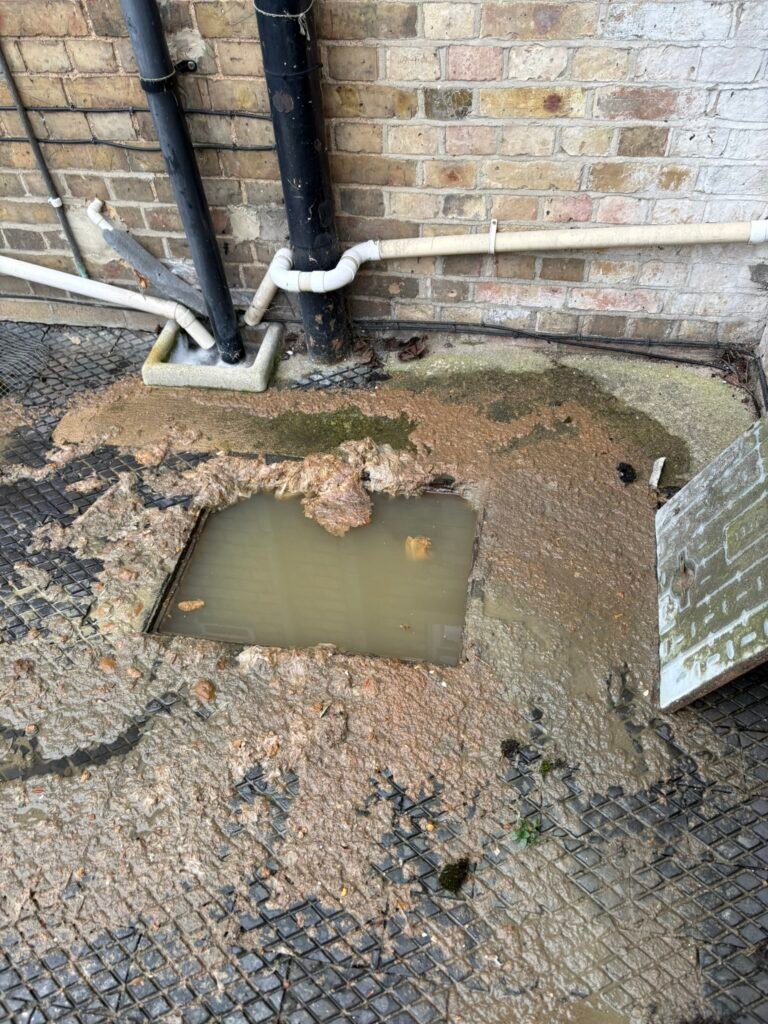
If the problem appears at the lowest fixture, nearest gully, or most accessible chamber, that does not prove the fault is there. It may simply be the first place pressure, standing water, foul air, or restricted flow can show itself.
The symptom is treated as the fault
A blocked kitchen sink, overflowing gully, or smelly downstairs WC may only be the first place the problem shows. The restriction may be further along the drain where several branches meet. If water is backing up or slowing repeatedly, what happens downstream matters more than the nearest visible outlet. This is covered separately in Blocked Drains Explained.
Foul and surface water are mixed up
Rainwater and wastewater are often confused, especially around outside gullies. During heavy rain, a surface water issue can look like a blockage. In a combined system, rainfall can affect foul drainage behaviour. The question is not simply where the gully is, but what flow it actually carries.
Responsibility is assumed too early
The visible cover is not enough to decide who is responsible. A public sewer can run through private land, and a private drain can be the source of a problem before the public sewer is involved. Responsibility follows the pipe and the users it serves, not just the cover that happens to be visible.
Alterations are trusted without testing
Extensions, patios, new driveways, moved kitchens, utility rooms, and replacement gullies can all change the drainage layout. The work may look tidy above ground while the underground connection is wrong, shallow, poorly laid, or connected to the nearest pipe rather than the correct pipe.
Chambers are ignored or read too quickly
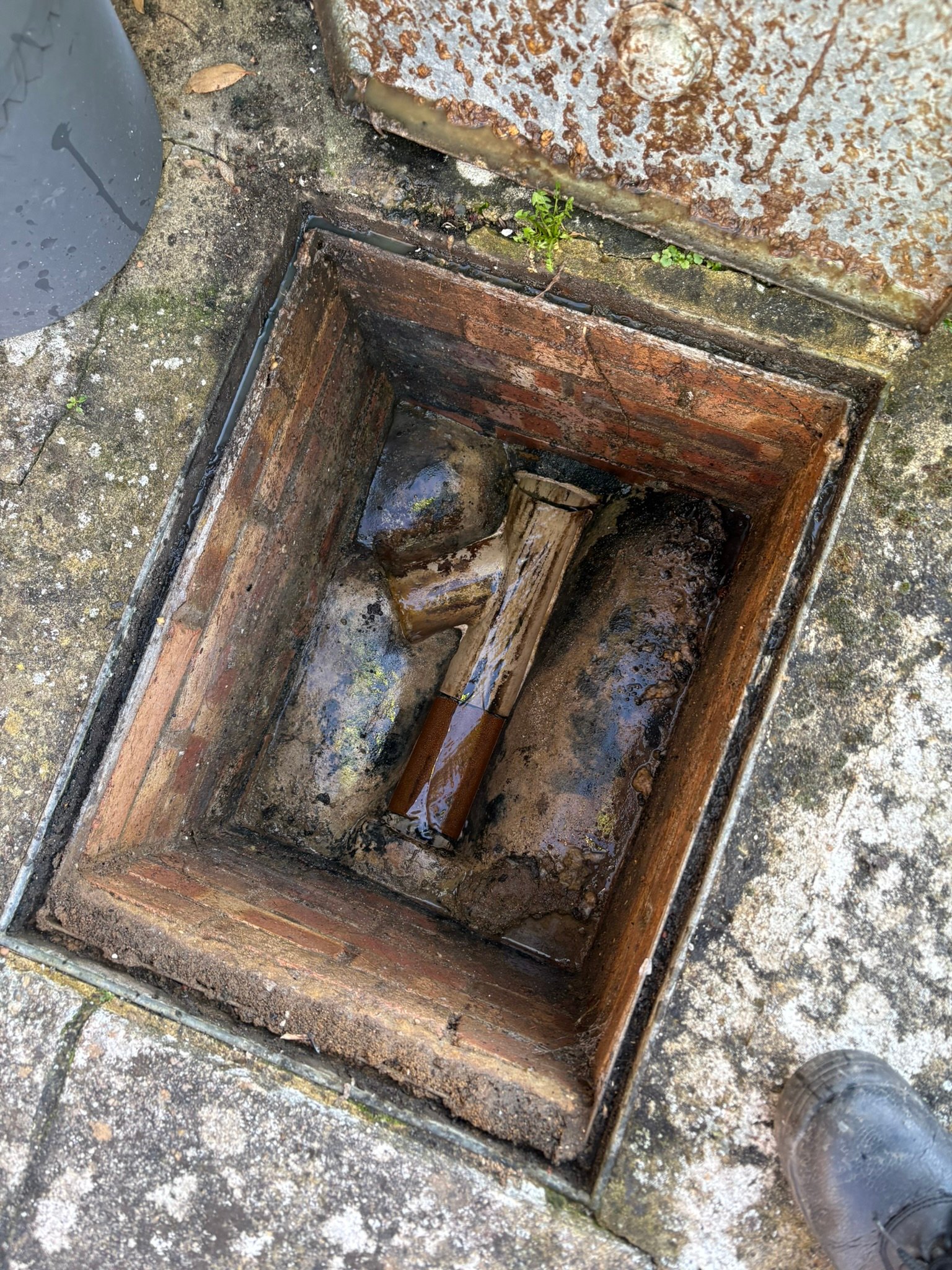
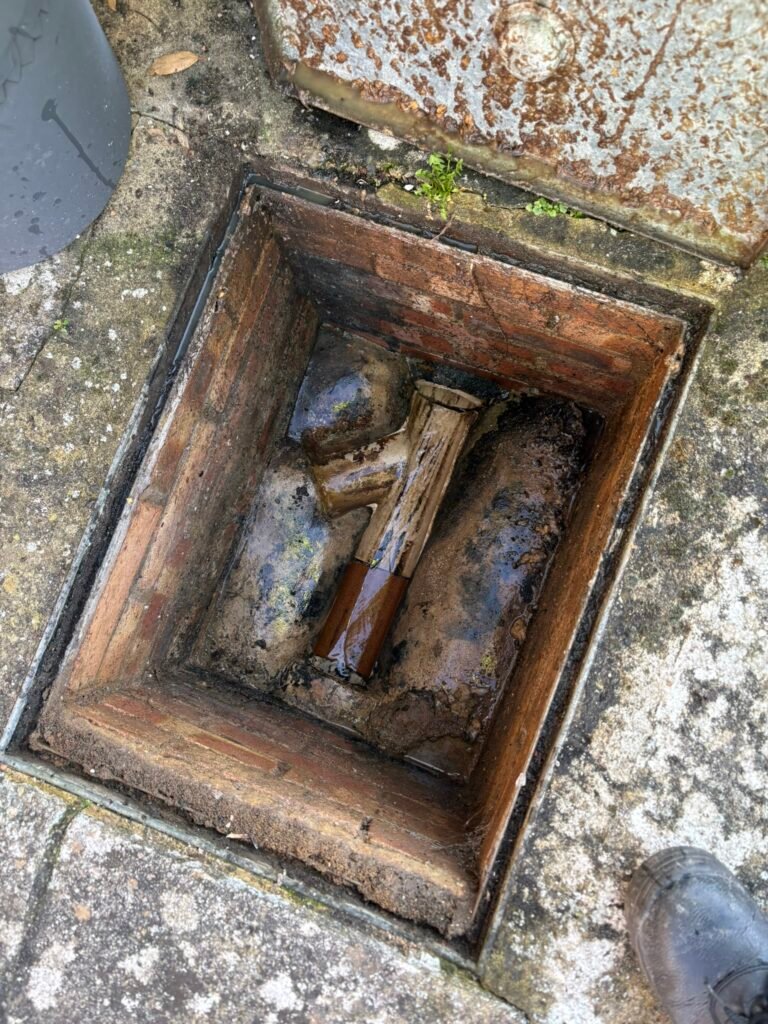
Inspection chambers and manholes often show the truth of the system. They show whether water is flowing, standing, backing up, or arriving from an unexpected branch. Looking only at the symptom inside the property can hide the real behaviour of the drain.
Practical tool: trace the run before naming the fault
- Start where the water enters. Identify whether the source is a fixture, appliance, roof, downpipe, gully, channel, paved area, or off-mains system.
- Decide what type of flow it is. Separate foul water, surface water, combined flow, pumped drainage, and private treatment where possible.
- Find the first access point. Lifted covers, inspection chambers, manholes, and rodding points show whether water is moving, standing, backing up, or entering from another branch.
- Check who else connects to it. A pipe serving one property behaves differently from a shared drain, lateral drain, or public sewer.
- Confirm the onward path. Do not assume the nearest pipe is the correct pipe. Confirm where the flow goes before deciding what has failed.
Symptom Check: What the Visible Problem May Actually Mean
- One slow fixture usually starts local: check the waste, trap, appliance connection, or short branch before assuming a main drain fault.
- Several low-level fixtures point downstream: suspect a restriction beyond the individual fixture, especially where branches join.
- A full chamber usually means look beyond it: the chamber may only be showing that water cannot move away.
- Rain-related flooding changes the question: separate surface water, combined drainage, capacity, and surcharging before calling it a simple blockage.
- Smells without backing up need wider checks: look at traps, venting, chambers, stagnant water, and foul connections.
- Repeated blockages are evidence of a pattern: look for root ingress, poor fall, pipe damage, scale, displacement, or recurring misuse.
For a wider symptom-led overview, see Common Drainage Problems.
How Engineers Think About Drainage
A good drainage engineer does not start by naming the fault. They start by proving what the system is doing: which chamber fills first, which branch is flowing, whether neighbours are affected, whether rain changes the pattern, and whether water is travelling where it should.
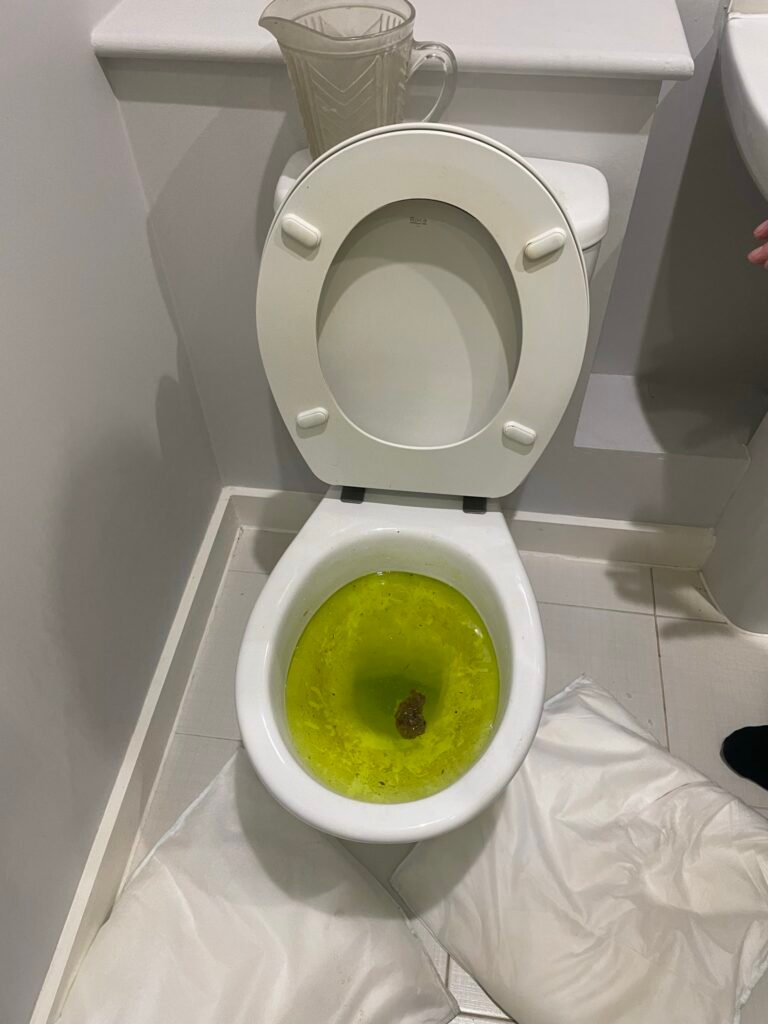
- Observe the pattern. Check when and where the symptom appears. Fixtures, gullies, chambers, smells, rainfall timing, and affected neighbours all help separate a local issue from a downstream or shared drainage problem.
- Prove the route. Run water and watch where it appears, slows, or fails to arrive. Flow checks, dye testing, and lifted covers show whether water is travelling through the expected foul, surface, combined, private, or shared system.
- Confirm the cause. Use CCTV, tracing, or mapping where the fault is not obvious. Repeat blockages, hidden chambers, suspected misconnections, and responsibility questions need evidence rather than assumptions.
Engineer insight: Drainage problems often appear at points where the system changes: bends, junctions, chambers, material changes, gradients, gullies, shared connections, altered pipework, or transitions between private and public drainage. The water path decides the diagnosis: local or downstream, foul or surface water, private or shared, adopted or off-mains.
The signs are rarely conclusive on their own. Slow fixtures, gurgling traps, standing chambers, sewage smells, repeated blockages, soft ground, and rain-related flooding only become useful when they are matched to the drainage layout.